
The potential benefits of ayahuasca retreats are easier to understand when you separate the brew from the retreat around it. Early research has identified possible psychological effects, but it does not show that a retreat can cure depression, resolve trauma, or guarantee lasting change.
A well-run retreat may offer something more practical: screening, preparation, consistent support, time away from ordinary routines, and help making sense of the experience afterward. This guide explains what those elements can offer, what research can and cannot tell us, and what to check before deciding whether a retreat is appropriate for you.
Ayahuasca, yagé, and the retreat setting
Ayahuasca is a broad name for psychoactive preparations used in different Amazonian traditions. In Colombia, the preparation is commonly called yagé. Ingredients, methods, language, and ceremonial roles vary between communities, so there is no single universal ayahuasca experience.
Research describes preparations that combine DMT-containing plant material with compounds that make DMT orally active. That pharmacology helps explain some acute effects, but it does not explain the whole experience. Expectations, health, relationships, the people holding the ceremony, and the days before and after can all shape what happens.
This is why it helps to distinguish three things:
- The effects of the preparation: changes in perception, emotion, memory, and physical sensation.
- The retreat container: screening, preparation, setting, supervision, rest, food, group boundaries, and integration.
- The participant's wider life: current health, medications, support network, expectations, and what they do after returning home.
A retreat can improve the quality of the container. It cannot control the experience or promise an outcome.
What benefits can a well-run retreat offer?
The most defensible benefits of an ayahuasca retreat come from its structure. These qualities are not medical claims. They are practical ways a retreat can reduce uncertainty and support reflection.
Time and distance from ordinary routines
Leaving work, devices, and daily responsibilities for several days can create room to notice patterns that are hard to see at home. The value is not isolation by itself. It is having enough time to slow down before ceremony, rest afterward, and avoid rushing immediately back into normal demands.
Screening before participation
Ayahuasca can be unsafe for some people because of their health history, current mental state, medications, supplements, or recent substance use. A responsible center asks about these factors before accepting payment or confirming participation.
Screening reduces avoidable risk, but it cannot remove every risk. It also depends on honest disclosure. Never stop or change prescribed medication to qualify for a retreat. Discuss any change with the clinician who manages your care.
For a more detailed overview, read our ayahuasca safety guide.
A consistent team and setting
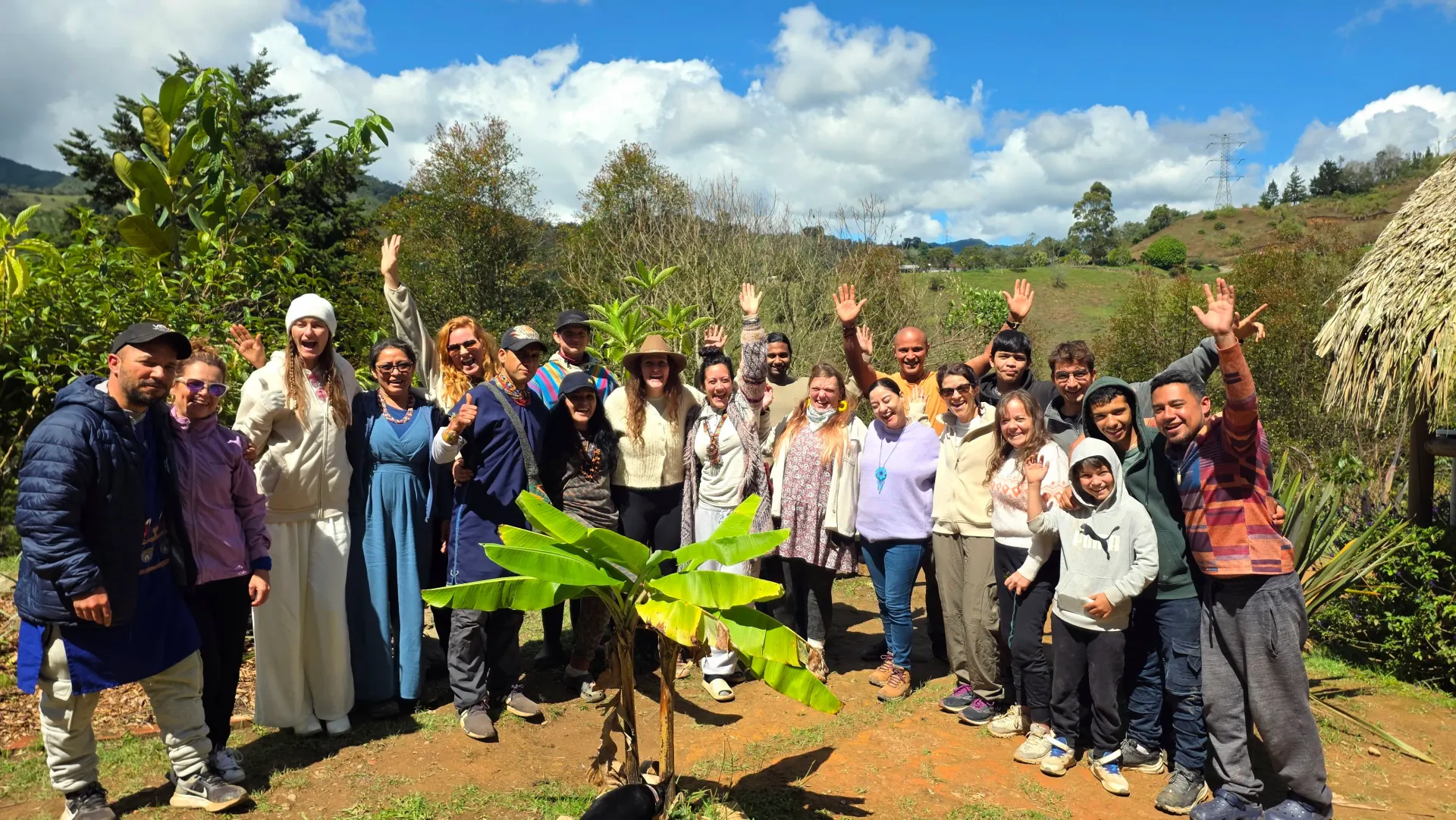
An intense experience can be harder to navigate when the environment is unfamiliar or poorly managed. A retreat should tell you who leads the ceremony, who remains available throughout the night, how participants ask for support, what the boundaries around touch are, and what happens in an emergency.
Titles alone are not enough. Ask what each person is responsible for and how the team works together.
Space between ceremonies
More ceremonies do not automatically mean more benefit. Time between ceremonies gives participants a chance to sleep, eat, talk, walk, and decide how they are responding. It also gives the team time to notice when someone needs more support or should not continue.
The number of ceremonies should never be used as a shortcut for quality.
Community without forced disclosure
Some participants value sharing space with people who are also preparing, resting, and reflecting. A group can reduce isolation and offer perspective.
Healthy community still leaves room for privacy. You should not be pressured to reveal personal history, adopt someone else's interpretation, or treat every difficult experience as a spiritual lesson.
Integration that starts during the retreat
Integration means reviewing the experience carefully and deciding what, if anything, belongs in daily life. That may involve rest, writing, conversations with trusted people, changes in routine, or professional mental-health support.
Good integration does not tell you what a vision “means.” It helps you separate insight from impulse and gives you time before making major decisions.
What does research say about ayahuasca benefits?
Scientific interest in ayahuasca has grown, but the evidence remains early. Reviews published in 2023 and 2024 describe its pharmacology, acute effects, safety questions, and possible therapeutic uses. They also show why careful language matters: studies differ in design, preparation, setting, sample size, and follow-up.
ClinicalTrials.gov lists a randomized, placebo-controlled study in treatment-resistant depression. A trial registration documents the study question and design. It is not, by itself, proof that ayahuasca is an effective treatment.
Taken together, the research supports cautious interest—not certainty.
What the evidence may suggest
Some clinical and observational studies report changes in mood, emotional processing, or patterns of substance use after ayahuasca. Participants in non-clinical settings also describe greater self-understanding, a different view of relationships, or a renewed sense of meaning.
These reports matter, but they do not tell us how any one person will respond. They may also be influenced by expectations, who chooses to participate, the ceremonial setting, and the support available afterward.
What the evidence does not establish
Current evidence does not justify saying that ayahuasca:
- cures depression, anxiety, PTSD, or addiction;
- “rewires” traumatic memories;
- improves brain health in a predictable or lasting way;
- produces spiritual growth for everyone;
- works because a person vomits or has visions; or
- is a substitute for medical or mental-health care.
If you are seeking help for a diagnosed condition, keep your existing care team involved. A retreat is not emergency care, inpatient care, or a replacement for treatment.
What might an ayahuasca experience feel like?
There is no reliable script. Some people report vivid imagery, autobiographical memories, altered time, strong emotion, spiritual meaning, or a sense of connection. Others experience confusion, fear, physical discomfort, nausea, vomiting, or long periods without clear imagery.
An intense experience is not automatically a useful one. A quiet experience is not a failure.
Purging can happen, but it should not be treated as proof that someone has released trauma or received a benefit. Staff should respond to physical symptoms practically and monitor the person's wellbeing.
Read what to expect during an ayahuasca ceremony in Colombia for a fuller description of the ceremony setting.
Preparation should reduce risk, not create pressure
Preparation is more than following a food list. Before a retreat:
- share your complete health and medication history;
- include prescriptions, over-the-counter medicines, supplements, and recent substance use;
- ask how your information is reviewed and who makes the acceptance decision;
- follow your clinician's advice about medication;
- allow time for travel, sleep, hydration, and recovery; and
- make practical plans for support after you return home.
Traditional dietary practices and retreat food guidelines may be meaningful within a particular lineage. They are not a substitute for medical screening, and you should not be asked to make an unsafe medication change in the name of preparation.
An intention can be useful, but keep it flexible. “I want to understand this pattern more clearly” leaves more room than demanding a specific vision or result.
How to assess whether a retreat is responsible
Before choosing a center, ask direct questions:
- What happens before acceptance? Look for health and medication screening, not automatic booking.
- Who holds the ceremony? Ask about roles, experience, language support, and who stays present throughout the night.
- How large is the group? The center should explain how staffing and supervision match the number of participants.
- What are the consent and touch policies? Boundaries should be clear before ceremony, when participants may be vulnerable.
- What is the emergency plan? Ask how the team responds to medical or psychological distress and how outside care is reached.
- What happens between ceremonies? Rest, food, observation, and the option not to continue all matter.
- What support is available afterward? Integration should be practical and should include referral to licensed care when needed.
- What is included in the price? Transport, accommodation, meals, ceremony count, and additional costs should be stated clearly.
Our guide to choosing an ayahuasca retreat goes deeper into these questions.
What a Camino al Sol retreat includes
Camino al Sol's standard retreat is a five-night, small-group process at Yaogará in the mountains of El Retiro, Antioquia. The standard format includes three guided yagé ceremonies, a maximum of 12 participants, health and medication screening before confirmation, preparation, integration, accommodation, meals, and transport from Medellín or the airport.
Ceremonies are held in a Colombian yagé context and guided by Colombian taitas, with bilingual support for Spanish- and English-speaking guests.
These details describe the structure we provide. They are not a promise of a medical, psychological, or spiritual result.
You can review the Colombia retreat format and upcoming dates. If you would rather ask a question first, message us on WhatsApp.
After the retreat: turn insight into observation
The days after a retreat can feel clear, unsettled, ordinary, or all three. Give yourself time before treating a feeling or image as an instruction.
Useful first steps may include:
- sleeping and returning to regular meals;
- writing down what you remember without forcing a conclusion;
- speaking with someone who respects both the experience and your autonomy;
- noticing whether a proposed change still makes sense after several days; and
- seeking qualified care if distress is persistent, severe, or affecting daily functioning.
Integration does not guarantee that an effect will last. It offers a safer way to test what is useful in ordinary life.
For more support, read life after ayahuasca.
A clear way to decide
The possible benefits of ayahuasca retreats are not a list of promised outcomes. The value of a retreat lies partly in the quality of its preparation, boundaries, support, and follow-through. Research gives reasons for careful study, but not for certainty.
Before deciding, ask two separate questions:
- Is ayahuasca appropriate for my current health and circumstances?
- Does this retreat have the structure and transparency to support me responsibly?
If either answer is unclear, pause and gather more information. If you would like Camino al Sol to review fit and availability, the next step is to apply for screening. No participation is confirmed until the review is complete.
