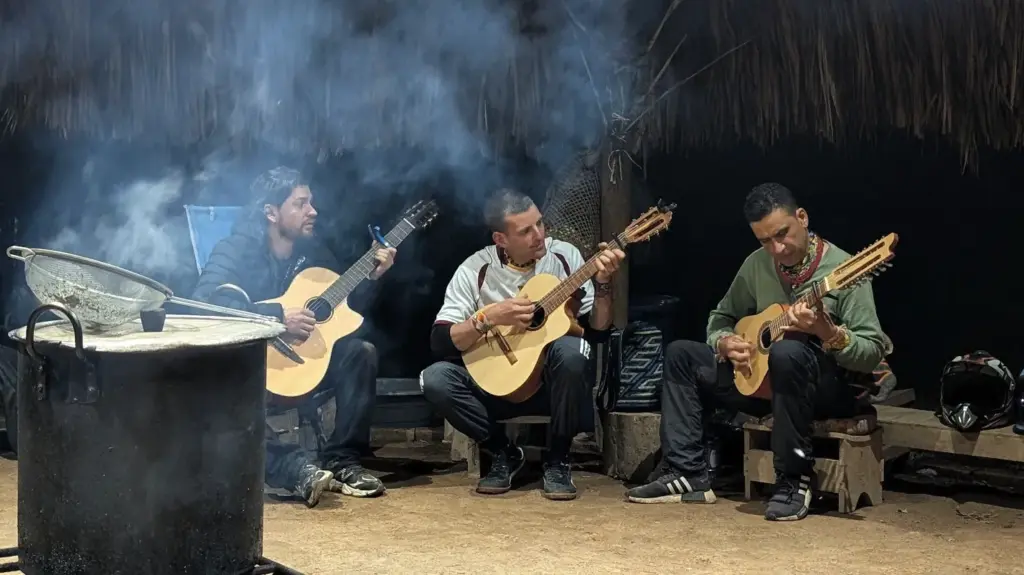
Ayahuasca, often called the “vine of the soul” or “spirit rope,” is a sacred plant brew from the Amazon rainforest. For centuries, Indigenous peoples in Peru, Brazil, Colombia, and Ecuador have prepared it in ceremony as a medicine for healing and spiritual guidance. More than a drink, ayahuasca is considered a teacher plant—a way to understand life more deeply, to heal wounds, and to reconnect with the essence of being human.
At its simplest, ayahuasca is prepared from the Banisteriopsis caapi vine and leaves rich in DMT—most commonly Psychotria viridis (chacruna) or, in some regions, Diplopterys cabrerana (yagé leaf or chagropanga). Together, these plants create a brew that opens perception and invites profound insight. But the meaning of ayahuasca is not limited to chemistry; it lives in the relationship between people, plants, song, prayer, and place.
Today, seekers across the world ask the same core questions: What is ayahuasca made of? How is it prepared? What happens in a ceremony—and is it safe? This guide offers a clear overview grounded in both scientific understanding and traditional knowledge, written in the spirit we hold at Camino al Sol: with integrity, respect, and care. For a symbolic and linguistic exploration, see our companion reflection on the meaning of ayahuasca.
What Is Ayahuasca Made Of?
Ayahuasca is a synergy of two primary plants:
- Banisteriopsis caapi (the vine) — a woody liana containing harmala alkaloids (reversible MAOIs) such as harmine and harmaline
- Psychotria viridis (chacruna) or Diplopterys cabrerana (chagropanga/yagé leaf) — leaves containing N,N-Dimethyltryptamine (DMT)
There are regional and lineage-based variations. Some traditions include small amounts of other admixtures; others work strictly with caapi + leaf. In Colombia, the medicine is often called yagé; in Brazil, hoasca or daime. Regardless of the name, it is approached as a living teacher, not a recreational substance.
Important: ayahuasca is not a DIY project. Traditional preparation requires experience, ceremony, and responsibility—elements missing from online recipes.
How Is Ayahuasca Prepared?
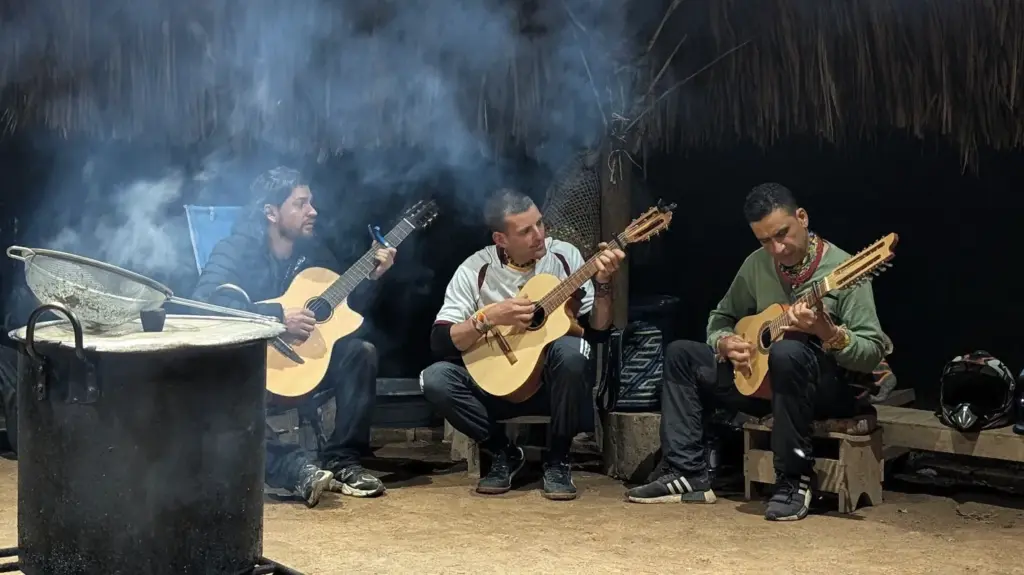
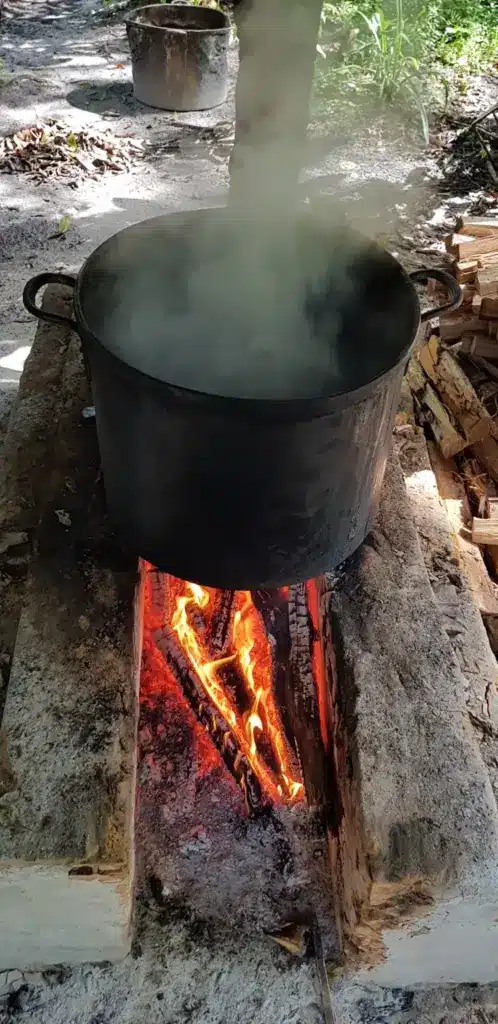
Preparation is a sacred process. The vine is cleaned, pounded, layered with leaves, and simmered over many hours—sometimes days. During this time, the brew is tended with intention, prayer, and ícaros (medicine songs).
Methods vary, but the goal is not potency alone. The guiding principle is clarity, safety, and appropriateness for participants.
For personal preparation, see:
👉 Ayahuasca diet guide
Names Across Cultures: Ayahuasca, Yagé, and “Iowaska”
The brew carries different names across cultures. In Colombia and Ecuador, it is commonly called yagé. Online, misspellings like “iowaska” appear but refer to the same medicine.
For deeper context:
👉 what “iowaska” means
What Happens in an Ayahuasca Ceremony?
Ceremonies are typically held at night and guided by a curandero, taita, or ayahuasquero.
Common elements include:
- Opening prayers and intention setting
- Ícaros guiding the experience
- Physical purging (cleansing)
- Visions or emotional insights
- Closing rituals and grounding
The guide ensures safety, pacing, and support throughout the experience.
The Science Behind the Sacred Brew
Modern science offers partial explanations:
- DMT activates serotonin receptors (especially 5-HT2A), altering perception
- Harmala alkaloids inhibit MAO, allowing DMT to become orally active
Early clinical research suggests potential antidepressant effects and increased neuroplasticity. One controlled study reported rapid improvements in treatment-resistant depression:
👉 Cambridge study on ayahuasca and depression
Scientific findings remain preliminary and should be interpreted cautiously. Traditional frameworks emphasize that outcomes depend on context, guidance, and intention, not chemistry alone.
Modern Interest, Healing, and the Challenge of Commercialization
Global interest in ayahuasca continues to grow. Reported benefits include:
- Emotional healing
- Reconnection with nature and community
- Greater clarity and direction
However, not all retreats operate responsibly. The quality of the container—guides, screening, and integration—directly impacts safety and outcomes.
For options in Colombia:
👉 Medellín retreat guide
👉 Ayahuasca Safety Guide
What to Expect: Sensory, Emotional, and Spiritual Dimensions
Experiences vary but often include:
- Physical sensations (heat, tingling, energy movement)
- Perceptual shifts
- Visual or emotional insights
- Release of stored emotions
- Personal or symbolic teachings
Integration afterward is essential. For perspective:
👉 reflection on why healing is not linear
Safety, Screening, and the Ayahuasca Diet
Ayahuasca is not suitable for everyone. Risks include:
- Medication interactions (especially SSRIs)
- Psychological intensity
- Cardiovascular stress
Preparation includes dietary and behavioral guidelines.
Learn more:
👉 Ayahuasca Safety Guide
👉 Ayahuasca diet guide
Ayahuasca vs. Synthetic DMT
Ayahuasca differs from isolated DMT through duration, guidance, and context. The presence of the vine, ceremony, and music shapes the experience significantly.
Common Misconceptions
- It is not a trend; it is an ancient practice
- It is not a cure-all
- More is not better
- Context matters as much as the brew
Integration: Turning Insight Into Life
Key practices:
- Rest and nourishment
- Journaling
- Support systems
- Boundaries
- Practical life changes
Integration determines long-term benefit.
Choosing a Responsible Retreat
Key questions:
- Who are the guides?
- What is their lineage?
- How is screening handled?
- Is integration supported?
Explore responsibly:
👉 ayahuasca retreat in Colombia
Final Words
Ayahuasca is not a shortcut. It is a demanding but potentially transformative process requiring preparation, guidance, and integration. The experience itself is only the beginning—the outcome depends on how insights are lived.
Further Reading
- Ayahuasca diet guide
- Ayahuasca Safety Guide
- the meaning of ayahuasca
- /blog/ayahuasca-vs-dmt/
- reflection on why healing is not linear
- ayahuasca retreat in Colombia
